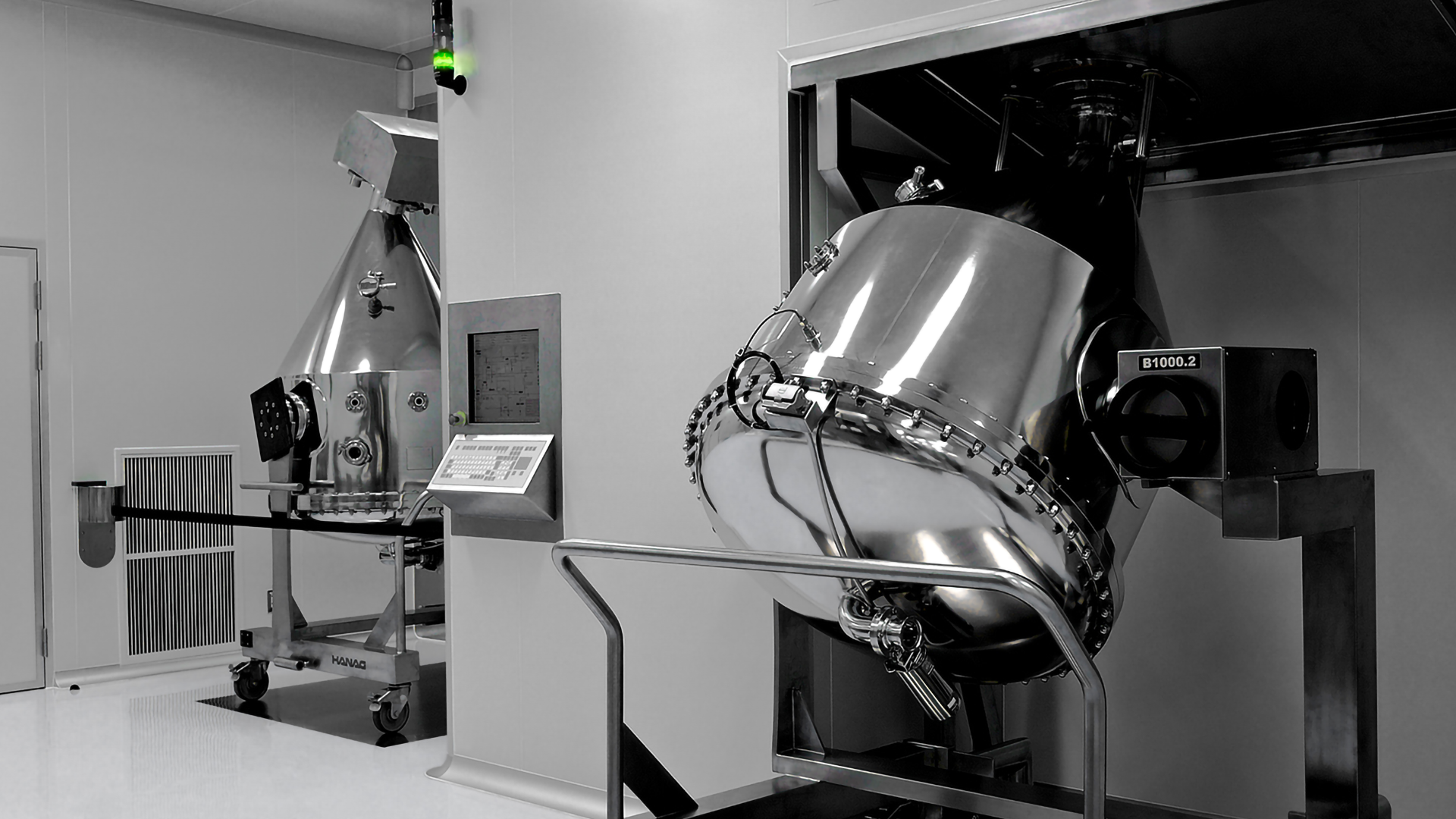
The castus Component Processing System (CPS) provides a comprehensive solution for the sterile treatment of caps and stoppers, ensuring they are cleaned, sterilized, and dried for pharmaceutical primary packaging. This system is crucial for the transfer process to the filling line, guaranteeing the highest levels of sterility and component integrity.
Advantages of castus Component Processing System (CPS):
- Provides cleaned, sterilized, and dried components and closures for pharmaceutical primary packaging.
- Capable of treating caps, liquid and lyo stoppers, lined seals, plungers, and components of all common types.
- Ensures 100% CIP/SIP (Cleaning in Place/Sterilization in Place) for thorough cleaning/sterilization, including the "ring of concern".
- Features a castus-specific smooth treatment process that prevents deformation of closures during processing.
- Offers flexible options for loading of the components into the vessel, including filling in a cleanroom or aseptic loading using a castus alpha Port for process safety and contamination-free transfer.
- The vessel remains on the trolley throughout the treatment process.
- Media distribution from the technical room to the process vessel occurs through clamp systems.
- The upper clamp system and opening of the beta flange are automated, while the lower clamp system is closed manually.
- The system is designed for high cleanability due to the dismountability of the pulsator and dished bottom plate.
- Prevents back contamination through a flow direction from bottom to top.
- A specially designed pulsator generating a fluidized bed and ensures a safe process with a homogeneous washing result.
- Offers automated docking and lifting of the vessel during discharge at the isolator.
- The lifting function is included in the moveable trolley. Which provides space-saving discharge positions with functions identical to a stationary lift.
- Ensures human and process safety through integrated safety systems.
- The Skid ensures the distribution of all required media for treatment, with sampling points for pure media.
- The Skid has a compact, self-draining hygienic design with accessible components for maintenance.
Component Processing System (CPS) Process Stages: The CPS process involves four main stages:
- 1. Loading
The vessel can be filled either in a cleanroom area under a laminar air flow or through aseptic loading. For aseptic loading, the vessel is in room class C, and filling occurs in room class D, with the castus alpha Port ensuring process safety and contamination-free loading. Support equipment like platforms with stairs, filling cones without physical vessel contact, or elevating lifts can assist the operator during filling.
- 2. Treatment
The vessel is connected to the treatment station, remaining on its trolley throughout. Media are distributed from the technical room via clamp systems. The lower clamp system is manual, while the upper clamp system (including beta flange opening) is automated. The beta flange including “ring of concern” will be open during the whole process.
- Treatment Steps: The system can perform various steps, optionally including, Pressure test, Vacuum test, Washing step(s) (with or without detergent), Final Rinsing, Siliconization (optional), Sterilization, Drying, Cooling, and Pressure overlay. These steps achieve perfect sterilization, particle and endotoxin reduction, removal of detergent residues, prevention of clumping, and assurance of smooth transfer.
- 3. Discharge at the isolator
For discharge, the vessel requires overpressure (min. 30 mbar overpressure) to maintain sterility. Lifting and docking of the vessel to the castus alpha Port at the isolator are automatic processes.
- Discharge options:
- Discharge with Stationary Lift: This stationary lift is bottom mounted next to the isolator.
- Discharge with Lifting Trolley: The lifting function is included in the moveable trolley, offering space-saving discharge positions with identical functions to the Stationary Lift. It results in fewer interfering contours in the cleanroom and no weight at the ceiling. Movement at the discharge station is completely automated. The trolley with a loaded vessel can be operated by one person.
- 4. Inspection
This step involves examining the inner side of the vessel to check for mechanical damage or any components remaining from the previous batch. Inspection can be carried out with the vessel on the trolley, as it can be rotated in its stand-alone position.
Component Details:
• Vessel: The vessel material for product contact parts is 316L stainless steel. Vessel capacity is available from 100 to 350 liters treatment volume. The goods are located within the vessel during processes. Connections and sight glasses are included for process observation and validation.
• Skid: The Skid ensures the supply of all required media for treatment. It allows for sampling points for all pure media. The technical area has a very compact design, ensuring access to all components. The Skid is self-draining. Hygienic design is standard, and process connections can be selected according to customer specifications (e.g., ISO 2852 (DIN 32676), DIN 11864). The process time is less than 5 hours.
For further information, please visit our website at www.castus.pro.
You can also contact us di rectly by e-mail at sales@castus.pro.
You can downlo ad our brochure here.