
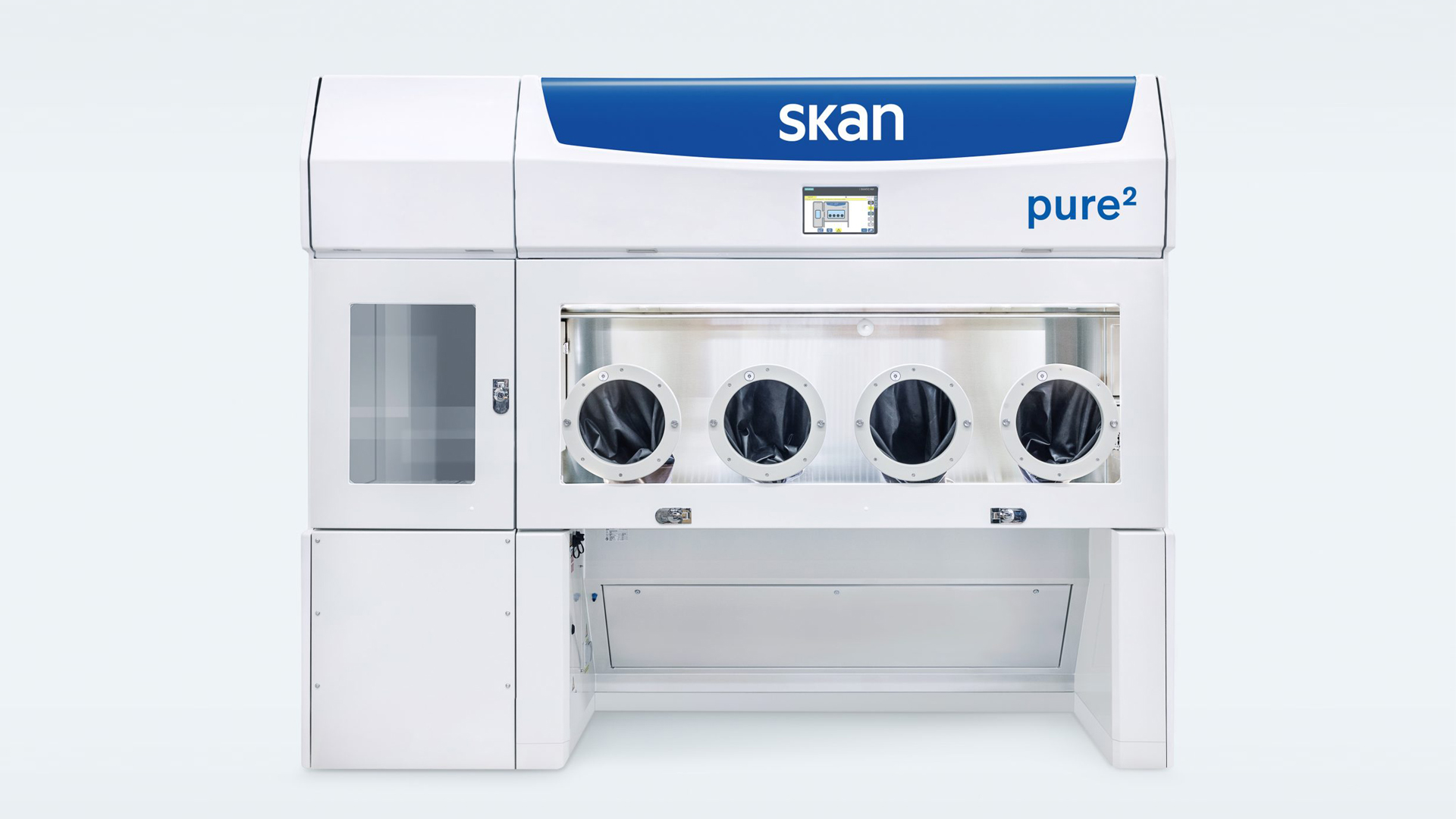
The processing of cytostatic drugs and the manufacture of ATMPs (advanced therapy medicinal products) place the highest demands on sterile and aseptic working conditions. Cytostatic drugs are highly effective but also toxic substances, the handling of which is strictly regulated, as even the smallest amounts can pose a health risk to personnel. ATMPs, on the other hand, are extremely sensitive products where even minimal contamination can significantly impair their efficacy or safety. This makes controlled, sterile process management of central importance.
Closed isolator systems offer a suitable solution for this. They enable the safe processing of cytostatic drugs and the manufacture of sensitive cell and gene therapy products in a fully controlled environment. The physical barrier reliably protects personnel from exposure to hazardous substances while maintaining product quality and sterility. This is particularly relevant in facilities where both patient-specific and standardized manufacturing processes are carried out.
Isolators create a consistently EU GMP Grade A-compliant aseptic process environment, thereby meeting the requirements of EU GMP Annex 1 and the regulatory guidelines for ATMP production. Modern decontamination systems enable validated microbial reductions and contribute to a reproducibly sterile working zone. Fast decontamination cycles support flexible process flows, which is particularly advantageous for temperature-sensitive products.
In addition, such systems allow for the customized mapping of a wide variety of manufacturing processes—from standardized routine activities to complex ATMP applications. Since many of these products are only manufactured in small quantities and under sensitive conditions, a closed system significantly reduces the risk of unintended contamination.
Isolators also ensure a high level of personnel protection for cytostatic processing. All activities take place behind a closed barrier, preventing direct contact with toxic substances. At the same time, ergonomic workstations enable precise and repeatable execution of processes.
In addition to physical protection, modern isolator systems contribute to improved process control, validation, and documentation. Integrated sensor technology, monitoring functions, and software solutions support compliance with data integrity according to GAMP standards. All critical process parameters can be recorded in a traceable and audit-proof manner. Standardized workflows and defined decontamination cycles also facilitate staff training, technology transfer, and compliance with regulatory requirements.
Closed, validated process environments thus make a decisive contribution to enabling the safe, flexible, and efficient manufacture of cytostatic drugs and ATMPs. They support both individualized and standardized therapies, protect employees, and ensure reproducible product quality under regulatory-compliant conditions.